Friday, April 17, 2015

Actors and Me. Musings on Fraternity.

I work with actors. Often I produce plays that have actors in them. I direct actors quite a bit. I also coach professional actors and teach young actors. Sometimes I act with actors. I have done all of these things with actors for well over 30 years. I have rarely been disappointed when doing this work.  Yes, I have a day job to pay the rent, get the suits cleaned, buy some plants for the garden and food for the fridge, and occasionally take my beautiful and talented actress wife on a swanky date. This work I do with actors does not fill my wallet. Not even close. However, these collaborations do fill my soul. They make me laugh. They make me cry. They make me think. They challenge me and make me better. Actors and the work actors undertake are one of my deep passions. I care about them. Their work, their psyche, their bodies, their voices, their health, their joy, their exuberance, their commitment, their intelligence, their opinions. Them. I care about them. Even the ones I don't much like, I still care about.

Now when I use the word "actor," I mean something very specific. I mean those men and women who are trained in the imaginative world of creating and inhabiting characters based on the written words of playwrights. I do NOT mean people who are merely celebrities. I do NOT mean people who call themselves actors but have never been on a stage or in front of a camera in a character. I do NOT mean people who, while perhaps are entertainers of some kind, have never lost themselves in the words of Shakespeare or Mamet or Miller. I do not mean talk show hosts or comics or models or media personalities or people with a website dedicated to gossip.

I AM referring to people who know how to use their voice. People who can speak properly and be heard in a theatre. Women who can project while wearing a corset and men who know how to walk on a raked stage. People who have been in a dark rehearsal room with other actors pouring over lines and movement and gestures. People who refer to a cigarette and a Diet Coke as "dinner." You know - Actors.

In my relationships with and between actors, even after all this time, I am still taken aback by the passion that actors have about what they do. Most recently, there have been two instances that have made me at once proud and so full of hope for the future of my tribe, my band of brothers and sisters, who have chosen these impossible careers.
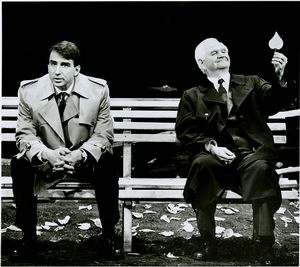
The first is what I'll refer to as the "intimate theatre debate" occurring here in Los Angeles. For those unfamiliar with this ruckus, suffice it to say that a very large number of actors in LA are at odds with their own union about whether or not actors should be allowed to work for free (or close to it) if they so choose. The actors want to be able to make that determination for themselves. The union (Actors' Equity Association) says, no. Actors must be paid a minimum (regardless of budget or revenue) or else suffer not working under the protections of the Union. [For the sake of this post, I am dramatically oversimplifying this debate, obviously. For more info click here.] What has happened over the course of this argument may be more significant than the end results of Equity's action. The actors (several thousand of them I might add) have rallied together in an amazing display of solidarity as ARTISTS. They have communicated intelligently and passionately and (for the most part) civilly about this work they do as a community. Theatre artists and intimate theatre companies have joined their voices, and in some cases their very memberships, to support the idea that actors are special and have unique needs and requirements and consideration. From the very famous with lengthy careers to those just starting off on this arduous path -- they have joined together to control their own artistic destiny. Basically, making the case that the manner in which they pursue their art is just as important, if not more so, than money. I have never been as proud to be a member of this community as I have in the last several months. While the outcome will certainly affect me as a producer, the unity, collaboration and homogeneity of the theatre community in Los Angeles has been staggering. And beautiful.
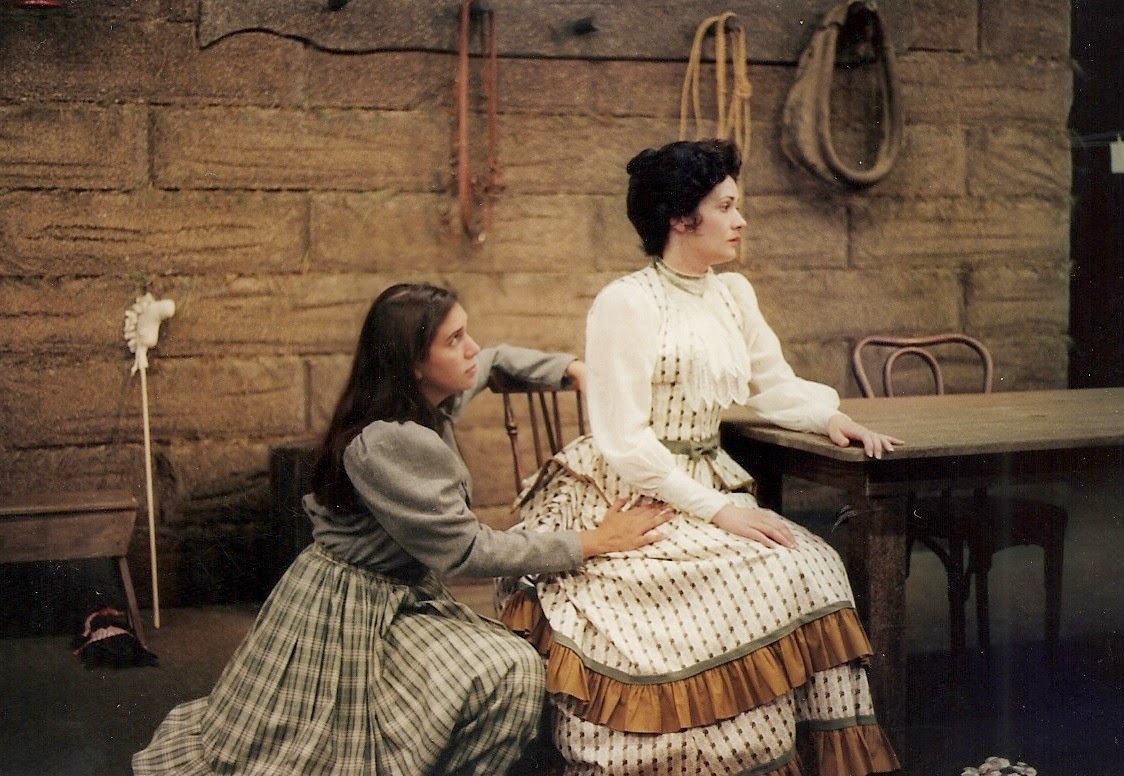
The second occurred 1000 miles away in Portland, Oregon. Several times a year, I am asked by a few theatre companies and a couple universities around the country to come and hang out with their actors. Sometimes a couple days, sometimes a few hours. We call them "master classes" or "workshops," but I like to think of them as collaborative skull sessions where a company just gets a different perspective (mine) on their work or process of work.

Usually, when someone like me comes in to work with a group like this there is some initial resistance. I mean, let's face it, I'm not a household name in the theatre world (nor do I want to be), I don't have a book to sell, and I do not posture or pretend to be some kind of guru. I'm not. I'm just a theatre guy that has some experience and knowledge that some actors might find helpful. Hopefully, I can communicate it in a meaningful way to the actors around the table.

This particular group of actors seemed different, though. Experienced though they all were, they appeared open and available. (Each one of them also happened to be very talented, but that's a whole other subject.) I'm sure they had their questions about me. I had worked extensively with one of the actors (he's is the reason I was there in the first place), but the rest didn't know me from Adam's off ox. Yet, here they were for two days listening, questioning, applying, investigating new techniques. Challenging themselves and each other to get better, to learn, to experiment. Remarkable. And beautiful.

Two groups of actors separated by size and distance. Each proclaiming to the world and themselves that what they do has merit, is important, and should be constantly nurtured and improved upon even in the face of impossible odds.

Who does that? Actors do. And I love them for it.


Friday, March 6, 2015

The Actor: Artist or Employee

There is, once again, a debate in the Los Angeles theatre community. A big one. A serious one. The arguments are heated and passionate. Most often the headlines read: "Deathknell for LA Small Theatres," "Intimate Theatres Threatened," or "New Plan Will Decimate LA Theatres." I think the real issue is less about LA theatre and more about LA actors.

At the very core of all the heated discussion currently surrounding the AEA 99-Seat Theatre Plan, is a very simple question (well, a short one, anyway): What is an actor?
Is an actor an artist? Like, let's say, a painter or a sculptor? Or, is an actor more like a musician who picks up occasional gigs? Is an actor a craftsman? Second cousin to plumbers or carpenters? Perhaps, actors are laborers. Just blue collar working stiffs similar to our teamster friends or restaurant workers.

Now before you get all up in my grill about these categories, I know, I know...I get what you're thinking. There is some crossover with all of them and certainly the lines of demarcation aren't crisp and clear. Point of fact, at any given time, and in any given production, an actor could be any and/or all of these things at once or in any combination. Bottom line is that actors, especially those based in Los Angeles, are once again caught in this terrible gray area of what their Union leadership wants for them and what they want, or maybe need, for themselves. The division lies in defining what actors are, what they define themselves as, and whether or not the Union leadership respects and accepts that.

If actors are artists, then they must be given the opportunity to practice and create and collaborate at their convenience and with those they value and have respect for. Actors must be allowed to create projects that they feel are important or have merit free from the arbitrary calculations of what other artists do in other places. If actors are artists, then the people representing them must take that into account when making decisions that impact the practice of that art.

If, however, actors are merely part-time laborers that take a job when it happens to come around, then the rule book needs to change even more. If that definition is true (or more true, I guess) then we have a whole slew of others things that are going to have to get sorted out. Like the number of British productions coming to Broadway and touring nationally lock, stock and stage manager. Like the growing numbers of British and Australian actors coming to the States without the equivalent number of American actors working in their wake back home. Like the extreme lack of resources directed towards actually trying to help developing theatres grow beyond just demanding that they pay people at the expense of their very existence and the actors' desires.

I have been "in the theatre" most of my adult life and the vast majority of my friends and colleagues consider themselves artists.  They view their life as a creative journey that requires imagination, enthusiasm, passion, and education. They know going into it that it is going to be a tough road. They accept that. So long as they can find fulfillment in other ways -- like teaching theatre at a college, like booking a commercial or an occasional under five, like taking a role that they would never get to do otherwise at an intimate Los Angeles theatre -- everything will be okay. They can proudly and rightfully call themselves actors if they are engaged with their craft and sharing the results of their work.

Do actors want to get paid for their work? Of course, they do. Even though they know the odds are stacked against them. Just as painters want people to buy their canvases, actors want people to pay to see them perform. But painters don't paint only when they have a buyer lined up. They also don't sit around their apartments waiting for a commission. They paint. They create. Constantly. They expend time and energy and money as an investment into this obsession that is more than a job - it is a way of life. Imagine if a painter were only allowed to buy paint when he was guaranteed someone was going to buy a painting. The exact same thing holds true for the actor. In Los Angeles, that often means performing in a theatre with less than 99 seats in it. It means joining with other like-minded creatively obsessed theatre colleagues to collaborate -- to paint. 

Being an actor is a unique profession. It is unlike any other profession represented by labor unions. It is rarely, if ever, a 9 to 5 career. The coffee is worse. The uniforms change from job to job. It requires imaginative and experiential trial and error. Additionally, I think you could argue that actors are the only workers, union or otherwise, who are required to take a large part of their work home without pay regardless of contract, union status, or quality of show. Learning lines takes time. Actors do that outside of the rehearsal hall. Away from the stage. On their own time. For free. Always. That's what actors do.

The world that the actor lives in is a complicated one. It is also a unique one because, more often that we would like to admit, anyone who has an Equity card (or a SAG-AFTRA card for that matter) may call themselves a "professional" even if they have no training and little to no experience. Justin Bieber has done some TV. Mariah Carey and Britney Spears have been in movies. Jennifer Nettles is on Broadway. Does that make them actors? Does that make them artists? There's a difference between actors and celebrities.

To drill down further, each play and each each role requires specific criteria. Players are not cast for a role simply because they have a union card and are next in line. Each production or film or TV show or commercial has a litany of defining restrictions such as cast size, race, gender, age, etc. Each production, each role reduces the number of available actors by the specifics determined in the playwright's imagination. I mean, it's not like applying for jobs at a bank where a teller could be any gender, any age, and race. King Lear is old. Joan of Arc is a woman. Felix and Oscar are men. Acting is a hard, unfair and complicated business to be in. But as artists, few real actors working in Los Angeles would trade what they do for anything in the world despite all of these things.

In the 1970s, a theatre professor at Loyola Marymount University, the much loved and respected Emmett Jacobs, wrote the following in an LMU workshop program: "So often in the theatre, we are so trapped by the edifice complex and all the trappings that go with it, that we loose our capacity to do artistic research."

Artistic research.

Like painters and other artists, actors do not continue to grow because they have finished drama school or college. They do not rest on their laurels because they have finally gotten their Equity card. They do not, they cannot, create in a vacuum. Actors must get on their feet, get off book, collaborate with others, try things out, fail, adjust, try again. While money is important, it is not nor has it ever been the sole factor in why someone becomes an actor. Actors are artists.  They choose to be artists. Any changes in a small theatre plan should...must...accept that.

Tuesday, February 17, 2015

Theatre in Los Angeles - Actors Need to Act

Painters may create in silence. Sculptors may give life to their work alone. Even musicians may forge new work and practice their instruments in solitude. Only the actor requires the noise, the chaos, the collaboration of not just other actors but of audience. Actors are not the same as assembly line workers in Detroit nor is the theatre the same as the auto industry. Actors are not the same as truck drivers nor is the theatre comparable to the shipping trade. Actors are collaborative artists who depend upon, no, require, people and places to ply their craft. The protections a union provides actors should be as unique for them as they are for the other unions. Police, maritime, culinary, whatever.


If we lived in a cultural fantasy-land where all actors could be employed 40 hours a week, for 52 weeks a year, these difficult conversations about the 99-seat plan would be unnecessary. If we lived in a country that fully supported the arts, at all levels, and equally in all markets, these derisive issues would be less contentious. But we don't. In our reality, only 5600 AEA members nationwide (of the 45,000 members) work in any given week. And the average length of a contract is about 17 weeks.

The point: Even in a boffo year for the theatre box office there's not enough work to go around and merely mandating that theatres adhere to arbitrary pay requirements based on the desire for a different theatrical reality will not change that.

However, professional actors need to act, to stay sharp, to keep up-to-date, to work the muscles of their craft, to practice. Like all other artists they must grow, they must experience, they must continue to create. This is what separates them from the hobbyist, the mere celebrity, or the wannabe. The small theatres in Los Angeles provide that opportunity. Sacred Fools, Theatre of Note, Actors Gang, The Fountain, an others equally deserving of mention, provide theatre artists a place to do all this. Take a look at their 990s and you'll quickly see that most of these very creative and productive theatres are not rolling in dough. Far from it. They are surviving, yet they are vibrant and creative in spite of their bank accounts.

Are there abuses in the 99 seat plan? Of course. Those need to be addressed. But not all producers are evil geniuses bent on sucking the life force out of unwitting actors and draining ignorant audiences of their filthy lucre. Likewise, not all actors and theatre professionals are mindless sheep bleating for a kind shepherd to care for them. These are artists. Adults. They knowingly collaborate with friends and colleagues for their own reasons. That should be respected.

Is the current 99 seat plan perfect? No. Can something be done to improve it? Probably. But let's figure that out in a way that still serves those talented, caring and committed people most affected. Oh, and maybe, just maybe in the process AEA will reflect on the reasons that they were created in the first place: "Equity seeks to advance, promote and foster the art of live theatre as an essential component of our society."

Tuesday, August 12, 2014

"Life is Hard, Then You Die"

Sure, I know. The circle of life. Death is inevitable. Blah, blah, blah. I know.

When my wife and I were young actors, she had a great t-shirt she used to wear to rehearsals. Black with white letters: "Life is hard, then you die." Being young and invincible, this shirt was like a war cry. I would laugh whenever she wore it. Striding to the car, make-up kit in hand, lines memorized, ready for another opening. Another show. Thread bare and tattered that shirt eventually ended up in a rag box or thrift shop.

There was no irony in that shirt. And as I age, no humor. Optimistic as I am about life, the shirt spoke to a deep truth. Dear friends too vibrant to cancer, voice coaches too joyous to ALS, sisters too young to diabetes, fathers as big as Bogart, mothers as kind as strong as Greer Garson. Disease, despair, war, accident, or parts simply wearing out from well-lived overuse. We all lose people. But unlike the piano or cooking or learning your lines, death does not get easier with practice. It gets harder.

I'm no counselor, though I know some. I'm no psychiatrist, though I've played one on TV. But I am experienced, like you, in the difficulty and the pain of death. As we add another name to the "In Memorium" reel that will be shown at the Academy Awards, I hope we can take stock of the advice we'll be seeing over the next couple of weeks. Even though we will have heard it all before and far too often, we must, or rather we need, to pay attention to the Tweets and Status Updates counseling us to live life to fullest, love each other, hug our children, kiss our spouses good night, don't go to bed angry, laugh often, and don't forget to say the things that matter before it's too late. Robin's family would agree. So would Betty's.

Blah, blah, blah. I know.


Monday, June 16, 2014

New Thoughts on Father's Day


Father's Day, 2014, is in the books.

I'm thinking most fathers take their special day a little bit for granted. For years now you've been getting socks and tools and manly do-dads (see what I did there? do-dads?) on the third Sunday in June. What started as cute, whimsical, homemade cards from your precious daughter and strapping son have evolved into store bought greeting cards and the occasional phone call. Am I right? I hope not.

I didn't know my biological father very well. I didn't really even meet him until I was about 19 years old. My step-dad was the man who actually raised me. While I never called him "Dad," he was one.  He was the one who taught me to drive in a 1950 Ford truck he called Gertrude. He's the one who took me camping although he referred to it as "deer hunting." (We never shot a deer. Never. Not once. It was camping.) He's the one who bought me my first bike, first 10-speed, mini-bike, motorcycle. He taught me how to work on cars and let me hang out with him at the gas station (his night job after his day at "the plant"). He also gave me my first drink of beer and first shot of whiskey. He was my Dad.

Even after the divorce (my mother's third), he remained my reference dad. I thought everyone had that kind of dad. When I finally met my "real" father, I was struck at the differences between them. The differences between the two men grew as I got to know my father a little better.

My "father" was a middle management businessman. He wore ties and wing-tips. He was polite and gentlemanly. Navy man. He was exceedingly well-organized. He drank cocktails -- in moderation. I respected him, but never really felt any real emotion like love. I just didn't know him well enough.

My "dad" was a blue collar laborer.  He wore work shirts and steel-toe boots. He was blunt and rough around the edges. Army man. He usually left his socks in the living room. He drank beer -- quite often. I loved him in spite of his faults, his gruffness and the way he treated my mom in the waning years of their marriage.

Needless to say, I didn't have a common childhood. Normal? Yes. At least I thought it was. Common? Probably not. Don't get me wrong, I know there are millions of other sons and daughters that were latch-key kids, or children of divorce, or were raised by one parent, or had many step-this and half-that relatives. So, I know I'm not special in that regard. In fact, that idea of a Typical American Family probably doesn't exist anymore. My wife's parents were married for 47 years and had eight children. Uhm, yeah, that wasn't us. 

Here's the funny thing: I am sure we must have celebrated Father's Day. I'm confident my mother would have made sure of it. I just don't remember doing it. Since they are both no longer with us (my father passed away just last year in his 80s, my dad in 2000 at 65), this bothers me. As a kid, my dad must have gotten his share of socks or beer mugs or accessories for his truck. As an adult, I'm pretty sure I was conscientious enough to send something to both dad and father wishing them the typical Hallmark Card sentiments. I just don't remember. As big an influence each had on my life (in their own way) I don't remember any Father's Days. I guess that kinda makes me a bad son. To both of them.

Until recently, dads and fathers have always been an awkward subject for me. Obviously. My mom has been married four times, so it's complicated. My little brother's dad was my step-dad who raised me and there was my father who I met later in my life. My oldest brother and sister had a different dad entirely, but MY father raised them so he's their dad.... see what I mean? Complicated.

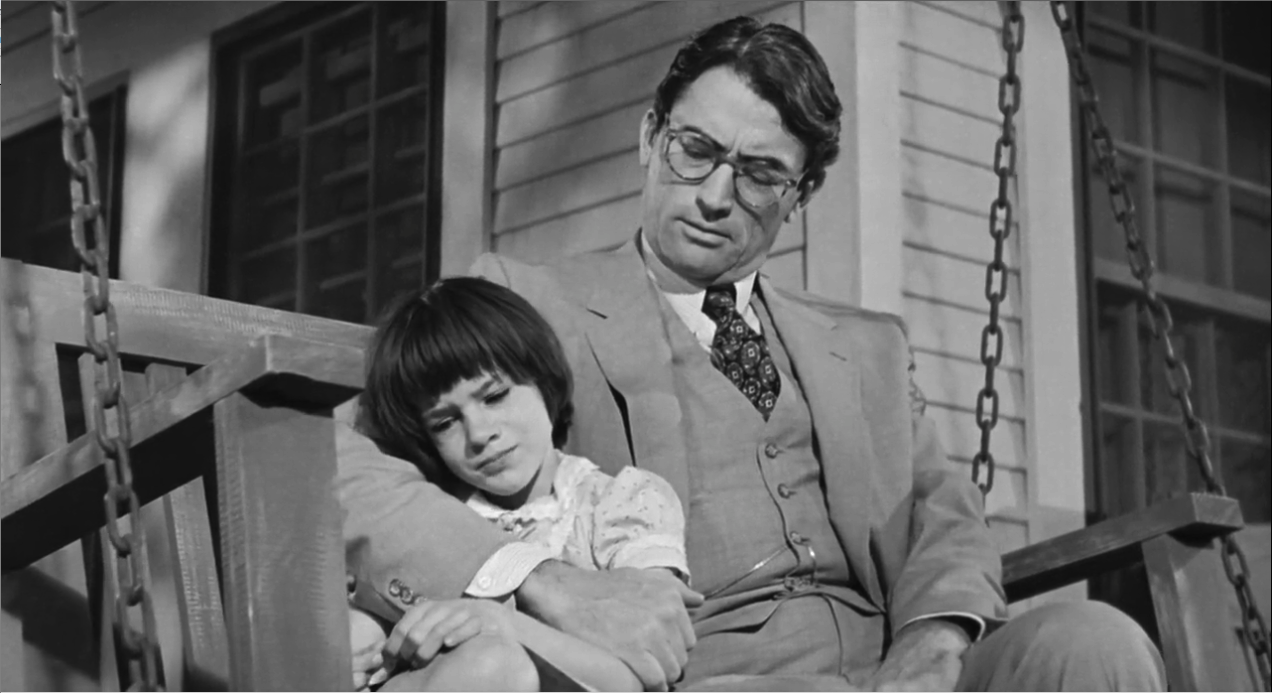
As an adult, my perception of fathers has been more informed by literature or film than by life experience. Bob Cratchit, George Bailey, Clark Griswold. Gregory Peck's portrayal of Atticus Finch in "To Kill a Mockingbird"is my all-time favorite movie dad. Not only is Peck's performance flawless, but so is the character. Of course, he stands for all things good and just as an attorney. We wish all of our lawyers were Atticus Finch. As a man he is handsome, respected, honorable. We wish all our neighbors were Atticus Finch. But more importantly, he represents the ideal father -- understanding, loving, wise, fair, smart -- but with a couple secrets in his background that, once uncovered, raises him to near superhero status in the eyes of his children.

This year I have been the recipient of a remarkable gift -- my first Father's Day. Replete with card and wrapped box. Inside both were perhaps the most perfect gifts that could possibly be given to me by my daughter on this particular Father's Day. With humor and heart she skillfully crafted for me a Father's Day like no other. So moving, so profound, so...perfect.

In reference to said box, the post script on the card said, "no dad can live without one of these from his daughter." Yeah, I get it now. I'll never take Father's Day for granted again. I hope you don't either. Oh, and I know it's just coincidence, but my spectacles are very much like those worn by Atticus Finch. Daily reminder in the mirror that I now have something, someone, to live up to.

Now, if you'll excuse me, I have to go put on my new tie.


Saturday, May 10, 2014

New Thoughts on Mother's Day


I love my mom. More than anything. But, I must admit, Mother's Day has always been a sort of a pain. I haven't lived near my mother for many, many years, so the mere fact of Mother's Day has been a race to remember a list of things not normally on my day-to-day radar.

I gotta get the card in the mail. (Wonder if we have any stamps.)
Oh, shit, I gotta go BUY the freaking card. (Maybe Trader Joe's will have a good one when I go pick up coffee and Joe-Joes.)
Should I send roses? (Whoa, those are expensive.)
Okay, set the alarm to Skype her on Sunday. (What's the time difference again?)

Don't say you don't know what I'm talking about. Face it, holidays can be a hassle.

This year is different. This year I find myself thinking about many moms. Top of this list is my mom, of course. 87 and still as sharp and cranky and inquisitive as ever. Sure the body's slowing down, but she continues to be a voracious reader (thank you Kindle!), can maneuver that walker around her kitchen without ever catching her oxygen tube on a open flame, and still has a secret little stash of candy bars in her "computer room." The best. Her name is Colleen. An Irish term for "young girl." Though her age belies it, her heart still believes she is one.

I'm thinking a lot about my wife's mom, too, this year. Gone too soon and for many years now, she was without doubt one of the kindest human beings I have ever known. Never a bad word about anyone. High praise given the challenge of raising eight intelligent and unique children. I mean these people could drive anyone to the brink. Very Catholic, her faith allowed her to think the best of everyone. (A trait that never rubbed off on her son-in-law.) Even when a young actor starting courting her second youngest, she was warm and loving and welcoming. Her name was Grace. From the Latin "gratia," meaning "God's favor." That she was.

Another mother has entered the scene this year. My daughter. This is her first Mother's Day as a actual mom. A big fabulous story unto itself, I first met my daughter in person about a year and a half ago. At 29 years old she is stunningly beautiful with an amazing smile and dancing eyes. She is intelligent, witty, funny, talented, discerning, all traits that make for a perfect mom (to say nothing of a perfect daughter). Her name is Heather, which is a flowering evergreen plant that thrives easily in barren conditions. If you are into names and numerology and all that stuff, it also means she is idealistic, creative, selfless, with deep inner strength. Sounds like the makings for a perfect mom.

So, this year I have finally figured it out. Mother's Day isn't really for moms. It's because of them. It's a mid-year Thanksgiving for the women in your life that you never call enough (They know you mean to), never thank enough (They don't expect it), and never understand enough (How could you?).

Great quote from The Golden Girls, “It’s not easy being a mother. If it were easy, fathers would do it.”

The card is in the mail, FTD has the order, and the alarm is set for early Sunday morning.

Sunday, March 9, 2014

Christopher Plummer - Is There a Torch to Pass?

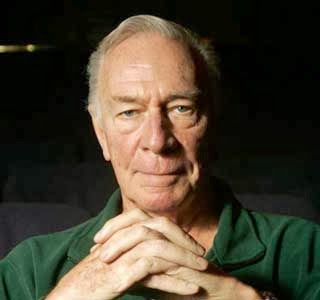
Several weeks ago, I saw two remarkable Christopher Plummer performances in as many days. "Barrymore" on PBS (for which he won the Tony when it was on Broadway) and his one-man show, "A Word or Two," at the Ahmanson. In both cases, I was moved and mesmerized by this fine actor's mastery of his craft. Vocally, emotionally, physically, he displayed everything I have always believed an actor should be and could do.

To look at Plummer so deftly fill the screen with nuance and detail, then watch him command a large stage with power and poise...well, I started to realize how rare that is. Then Sunday came and I got sad. The news about Phillip Seymour Hoffman popped up on my iPad. Rarer still.

Sure, there are great "film actors" around. Some good TV actors even. There are fine stage actors scattered all over the country in the big regional theatres, on Broadway, and in dodgy-ramshackle-black-boxes-in-crappy-low-rent "theatre districts" everywhere. But, where are the Christopher Plummers? Where are the giants that do everything well? There are really only a few left and they are starting to get a little long in the tooth. . Plummer, of course. Patrick Stewart. Ian McKellan. Angela Lansbury. Maggie Smith. Kenneth Branagh is up there for me. Waiting in the wings are the likes of...well, who, really?

Moreover, and this is the worrisome thing, in an age of reality TV, celebutants, stunt casting, the really great young actors don't have the opportunities they once did. When publications like Backstage cater more towards selling casting director workshops and providing a forum for agent advice columns, I wonder where young actors really go to get a good start in a business full of leeches hungry for their ten percent.

Not that the world and work of the actor has ever been easy. No one ever said it would be. But the giants like Mr. Plummer (and those who came before) do remind us that craft and art and longevity just might be more important that the number of hyphens you put after your name.