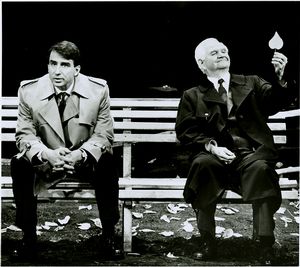
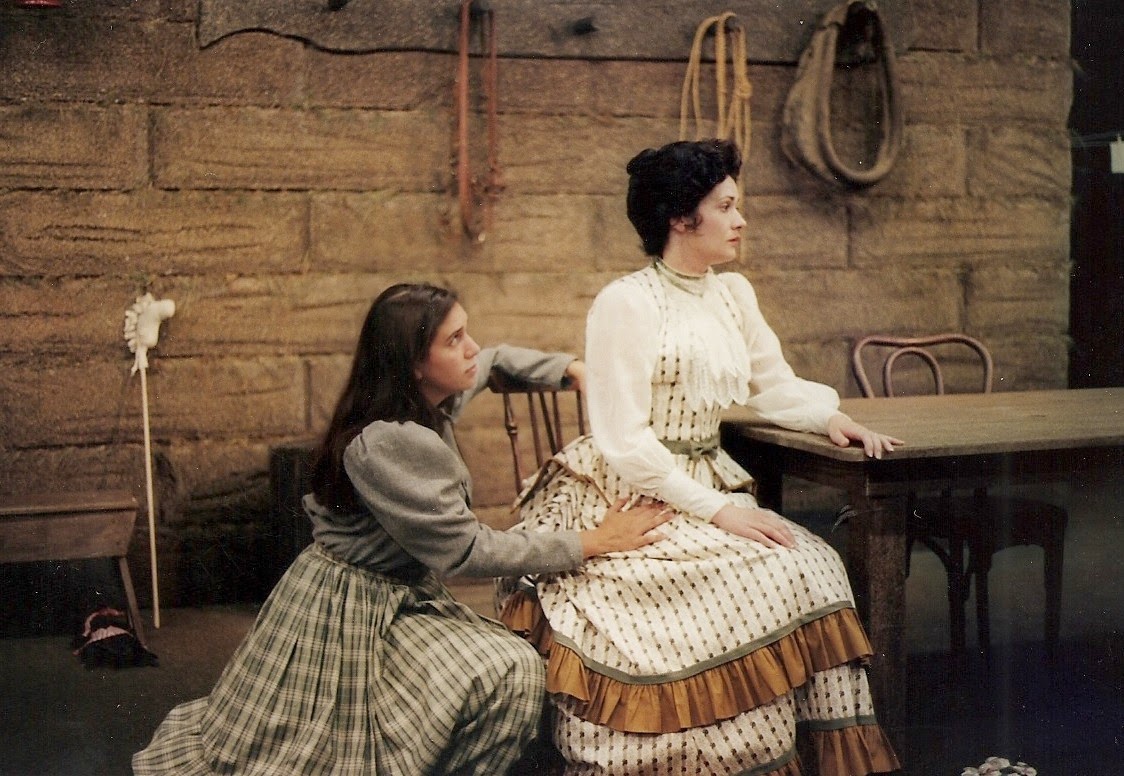
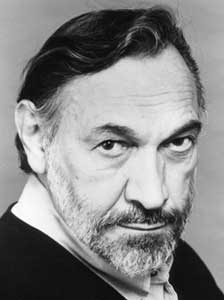
Showing posts with label actors. Show all posts

Tuesday, July 31, 2018

A Rant About Unprofessional Actors (Warning: Prepare for F-bombs)

I can't help it. I'm usually not like this. I mean, it really takes a lot to get me really aggravated. Seriously, I don't even send food back at a restaurant. Sure, if there is a Brillo pad baked into the bread or a used condom masquerading as salmon in Dragon Roll, yes, I'll raise my hand and try to get the server's attention. However, there are a few things that just piss me the fuck off. (I did warn you.) Some little, some big. For example, people who don't say anything when they are trying to squeeze by you in a store. Say something. "Excuse me." "Pardon me." "Move your fat ass, buddy." Something! Don't just stand there and get all irritated because I'm not clairvoyant. And don't exhale in exasperation as you pass by. That only pisses me off more. Here's another: Drivers who speed up when I turn on my blinker. Really? You're not gonna let me in and you are five cars back? You are gonna speed up just to let me know, what? You're so important that a little freeway courtesy is beyond you? Maybe you're in such a hurry that those extra two car lengths on the 405 are gonna make a difference to you getting to Target before the rush starts? Puh-lease. Asshole. Oh, yeah, those little stickers on produce? Fuck those. You ever try pulling those off a pear or a peach? Who invented those anyway? Ugh. Oh, and then, someone had to invent special printers to make those little fucking labels AND the special machines to put the little bastards on the fruit. No wonder avocados are so expensive!

Admittedly, those are mere annoyances that I wish could be remedied by civility or, in the case of those sticker-thingies, technology. There are, however, some things that are simply inexcusable. Actors, listen up. Specifically younger actors. I would hope the old pros out there would never do this, but who knows. I'm casting a play. I have cast many plays in my day, but this was a shock. A real wake up call. I put out the requisite casting notice in the trades. About 100 actors submitted for one of the roles. I invited twenty of them in to audition. Of those twenty, ten actors confirmed. The other ten didn't bother to respond at all. I sent the ten actors (who were professional enough to respond to an invitation to audition for a play they had submitted to) their times and their audition material. One of the scheduled ten contacted me the day before the audition and asked if he could reschedule because something important came up. Fine. No problem. The day of the audition arrived...two actors showed up to audition. Seven just blew it off. No call, no email, nothing. They just chose not to show up.


Why would anyone do that? People talk and people remember. Additionally, you never know where something might lead. My own company, for example, is work-shopping this new play (the one we're casting for), we have two movies going into production, we are working on a TV series, and we are planning a theatre season for 2019. As petty as this sounds, I will remember every single person who failed to show up, didn't call or email to cancel. Sad to say, I'll probably remember them more than the people who actually showed up, gave me their all for 3 minutes and didn't get the part.

Guess who I ended up casting? The guy who rescheduled. Why? First, he killed the audition. Second, I knew he was professional and would probably treat the role and the play with respect.

The business part of being an actor is hard. Really hard. It is as difficult, if not more so, than any other career. If you called a plumber and he never showed up after confirming a time to fix your sink, would you ever call him again? If you missed half a day of work for the cable guy to show up in that asinine four hour window and he never called but just didn't show up at all (okay, maybe a bad example), you would, at the very least, be somewhat annoyed. Do yourself a favor and treat your creative career like a profession not hobby. If you truly love what you do, afford it the people in the position of getting you work the same respect you would any other professional. Don't make me have to write something like this again.

Thank you. Next!


Thursday, January 4, 2018

In Defense of Hollywood, Again

2017 was  a tough year for Hollywood. Hell, it was a tough year for the nation. For the planet, even! With Awards Season upon us, we are about to be bombarded with more angst. We are about to hear from...wait for it...actors. We are about to watch award shows where (gasp) people say things that we might not like. 

About a year ago, Meryl Streep, arguably the greatest film actor of her (or any) generation blasted then President-Elect Trump. So began the Twitter wars - well, a Twitter war - waged on the "Hollywood elite." Hollywood. That monolithic, hypocritical, evil-headed hydra that is out to promote it's liberal agenda. That nefarious conspiracy bent on corrupting our children and poisoning the minds of our lawmakers. That factory of fantasy that dares to make us think about alien invaders, hope for superheroes, long for true love, fight for free press, indulge in crazy sex, and maybe even fall in love with a hairy monster (or even a slimy, scaly one).

In an article shortly after Streep's acceptance speech for the Globe's Ceceil B. DeMille Award, Timothy Stanley in CNN Online (Hollywood, Spare Us Your Hypocrisy), launched some very typical arguments - all of which we have heard before. Now, granted, much of what Stanley says in the article is fair and he certainly seems to agree with Ms. Streep's fundamental points. Yet, he, like so many others, creates this strange Hollywood specter that most of us in the industry simply do not know and have never participated in. Hollywood casting is hypocritical and bigoted. Hollywood is unfair at best, out-right discriminatory at worst. Hollywood is a Trumpian corporate greed machine concerned only with profit. Hollywood is a red-carpeted Skynet just waiting to drop a mind-controlling virus into our neural implants while we shove popcorn in our pie-holes.

These tired, old arguments are all far more complicated than the 35 year old Brit, Mr. Stanley, makes out. It's a deeper, more nuanced issue that few actually ponder before spouting off their opinions about "Hollywood." There is no "Hollywood." Hollywood is a phantom concept too often used as a scapegoat. There is no big tall building where bloated, cigar chomping movie moguls sit around conspiring over which white, British, male actor under 35 should get the next big role in Saw 9. Not every movie has an action figure licensing deal attached. Not every movie does a billion dollars worldwide at the box office. Do these things happen? Yes, they do. Rarely. No matter what you hear, actors (and other creatives, for that matter) are not interchangeable cogs in some giant golden gear cranking out lucre. 

"But," you are saying, "Harvey Weinstein!" 

According to the Motion Picture Association of America (yes, the MPAA members are the six "major" studios, but the data is real), there are somewhere around 400-500 "major" movies created in the U.S. every year. In 2015, over 2,300 dramatic features were submitted to to the Sundance Film Festival. Add to that some 1,800 documentary features. Add to THAT the countless short films that pop up out of every graduate film school across the country. Oh, and the U.S. is only #3 on the list of the world's top movie producing countries. We're behind India (Bollywood) and Nigeria. Nigeria! The people making these movies range from struggling young artistes with very specific points of view and very distinct, personal stories to tell all the way up to the giant blockbusters with budgets in the hundreds of millions. Hate to tell you, but there is no great and powerful puppet-master pulling the strings to all these stories. The handful of perverted assholes you hear about do not represent the vast majority of people in the world making movies for all the RIGHT reasons.

Do bad things happen in what is commonly called the "movie business?" Yes. Is there corruption and under the table dealings? Certainly. Is it always fair? Hell, no. Are there casting problems up and down the industry? Fuck, yea. Have been for a while. Will be in the future. Do we need to do better? Yes, absolutely. 

Casting, in particular, will never be perfect. Ever. There will always be something at issue in the process of casting.  So long as actors want to act, so long as opportunity is not afforded those who desire to pursue a career in acting, so long as theatre and film and television are viewed as hobbies for young people and not respected as actual industries of excellence and advancement, so long as those who attempt to study in order to learn the art and craft of the actor are marginalized or dissuaded from doing so, the playing field will be uneven at best.

When actors take classes or go to drama school they are taught that the purpose of learning their craft is to create characters. They are trained in voice and movement. They take classes in history and literature. They sing and dance and wear masks. They believe in and pursue the notion that they can play any part with the right amount of dedication, study, training, and talent. How many white actors have aspired to play Shakespeare's Othello? How many black actors have dreamt of playing Hamlet? Should performances of John Merrick in Bernard Pomerance's The Elephant Man be restricted to only actors with similar physical deformities? Should the role of Elisa (played by the fantastically gifted Sally Hawkins) in The Shape of Water have gone to an actual deaf mute actor? Is it unfair for a highly talented actor to play a disabled war veteran if that actor does not have that exact disability? Actors long to explore character and experience. They strive to experience and empathize with the wide variety of challenges set in front of them by playwrights.

I know what you are going to say. You are right, this isn't the 1600s, or even the 1800s. There actually ARE actors of color, actors with physical challenges, women actors who can play female roles instead of the men that used to play them in Shakespeare's day.  I get it. Look, this ain't easy. But to tell an actor, any actor, that they cannot be allowed to play a part because they are not perfectly typecast flies in the face of every reason the actor becomes an actor. I once directed a play that had a character who was 75 years old. I auditioned 200 actors. Not a single 75 year old actor came to auditions. Not a single 60 year old actor came, either. I cast a 50 year old and aged him up with make up. Am I ageist for doing so? Should my theatre have done a different play with more easily cast characters? Should I have kept looking? Hired a first-time actor?  Don't blame actors for the parts they get. It's a hard game.

Art is not segmented into the neat pie charts of population demographics. Not film, not theatre, not painting, not literature, not music. Art does not represent the masses. Should it? Perhaps. Maybe. Should it strive to be welcoming and fair? If anything should, art should. That said, art is also messy. It is subjective and devoid of the black and white that defines other parts of society. It is shades of grey and rainbows of color that many people just can't focus on.

If we must wield a sword of blame for all of this imbalance and unfairness, let's use it to hack at a country whose very culture oppresses those with points of view, those with stories to tell, even though we claim this is not the case. Blame family members who demand productivity from their loved ones instead of creativity. Blame a government that does not support the arts to any truly significant degree, so much so that young humans of color have no opportunity to create their own stories or even dream of doing so. Blame a system of education that is more concerned with children's test scores than actual knowledge. A place where these same children are not allowed to dream of a world in which they are valued. Where dreams of most young people are sacrificed for a notion that education of any kind, if you can afford it, is a job factory rather than a place of gaining consciousness and understanding. Education should never be just about choosing a career. In a perfect world, our schools would be dedicated to creating well-rounded human beings full of information AND imagination. After their schooling these same human beings would be full to the brim with questions of the cosmos, overflowing with an appreciation of nature, AND know how to balance a checkbook. They would understand civics, appreciate history - everyone's history, AND love poetry. They would be passionate about literature and the arts, they would respect other cultures and colors and creeds. These kinds of humans could adapt to any profession. Any job. They might even become filmmakers.

To clumsily paraphrase Shakespeare, The fault is not in Hollywood, but in ourselves.

Oh, back to Meryl Streep. If you are one of those people that think actors should not publicly voice their opinions on anything other than acting, I will welcome your silence at the bar when my Packers are playing. Unless you've played pro football, zip it.

Monday, February 22, 2016

"To Kill A Mockingbird" & Me

Last week, Harper Lee died. She was 89. I have been pondering her much this last week. (Maybe more so even than the passing of David Bowie and Glenn Frey though equal to my musings on my friend, Natalie Cole.) Until 2015, Lee had published only one book. One. One of the very few Great American Novels.

After my stint studying to be an actor at the American Academy of Dramatic Arts, I was hungry, no, starving, to continue gobbling up every bit of great acting wherever I could find it. I sought out every important movie I could find (VHS days), every play I could afford (waiter's salary), and listened to the spoken word recordings of the likes of Richard Burton and John Gielgud (perfect for LA traffic). Many of my contemporaries were dressing like Dustin Hoffman and combing their hair like Al Pacino. They were delving deep into the psycho babble of Strasberg. Making meals of cigarettes, cheap bourbon, and Cup Noodle. I was being drawn to a different kind of actor and, ultimately for me, a different kind of career. I found myself gravitating to the class and style of William Powell and William Warren. I still love the Pre-Code films of the early '30s and the deftly acted and directed screwball comedies of the 30s and 40s. I will stop whatever I am doing to dance with Fred & Ginger, light up a smoke with Bogart & Bacall, or muscle my way through a Gene Kelly number. (So, yes, I'm a fan of TCM.) I didn't want the mumbling anti-hero of James Dean. I didn't care all that much about the frantic intensity of the constantly-New-York-accented Pacino. I was looking for quiet power. Controlled technique. Acting choices based on writer's words not just personal reactions to internal, lizard brain desires.

Then I saw Gregory Peck in "To Kill A Mockingbird."

Everything changed. My search was over.

The story itself is a roller coaster of humor and drama, innocence and racism. Peck's portrayal of Atticus Finch won him an Oscar - as it certainly should have done. He is, simply put, perfect in the role. To this day, this is mandatory viewing for my acting students.

The character of Atticus is a towering figure. From height to humility, he is the very definition of a hero. But he is also a father of deep compassion and strength. A lawyer of thoughtful consideration and weighted intelligence. In 2003, AFI named Atticus Finch the greatest movie hero of the 20th century. Not Rocky Balboa or Iron Man. Not Indiana Jones or James Bond. Atticus Finch. A small town lawyer in Alabama. A widower with two kids.

I left the theatre that day wanting to live my life like Atticus Finch, the character. Of course, that didn't last long. Youth and Hollywood soon dashed all hopes of me ever having that kind of courage or conviction -- or morality. But what did last, was my great desire to try to be as accomplished an actor as Gregory Peck. And if not as talented or skillful as he, then certainly as utterly believable as he was in that one role at least once in my fledgling career. Gregory Peck in "To Kill A Mockingbird" was my benchmark for acting perfection.

For some reason, my teachers always picked other things to make us write term papers on, so I didn't read Harper Lee's book in school. In watching this film for the first time, I had no frame of reference. Just the movie. It wasn't until years later when I finally got around to reading the novel, that I realized how gracefully Horton Foote's screenplay captured the book and, indeed, the character of Atticus Finch. But even Foote's tremendously gentle screenplay would have been empty without Peck's Atticus. Maybe not empty, but certainly, less perfect.

As I have gotten older I have gotten noticeably more liberal about my intake of art. (I'll even enjoy me some Pacino and Brando now! (Except "Scarface." Still, no. It's the accent.)  I am much more accepting of imperfection in films and plays. A musician blows a sour note - what of it? A painting may not speak to me, but I'm sure there will be someone who appreciates it. Don't get me wrong, I still point out errors and poor execution. I still cringe at poor diction during a Shakespearean monologue and I have little patience for over-gesticulation buy a fresh-faced leading man. My wife and I still make good sport about how we could have fixed a certain line reading. But "To Kill a Mocking Bird" may just be the perfect film. I honestly cannot find a single thing that I would change. Boo Radley, Dill Harris, Bob Ewell. Wouldn't alter a line or gesture. Tom Robinson, Calpurnia, Judge Taylor. Wouldn't vary an expression or camera angle.

Similarly, I can say the same thing about the book. Scout, Jem, Atticus. Wouldn't replace a single verb or tweek one little noun. Harper Lee's long life yet all-too-short career left us with so much heart and wisdom, it's no wonder that we feel that we actually knew her. We certainly knew and loved her characters. Certainly, the impact that one book and that one  movie had on one young actor, changed him for the better -- and forever. Thank you, Harper Lee. Thank you, Gregory Peck. Thanks, Atticus.

“You never really understand a person until you consider things from his point of view... Until you climb inside of his skin and walk around in it.”-- Atticus Finch


Wednesday, January 20, 2016

On Ian McKellen and Acting.


In an age of meaningless Kim Kardashian celebrity and Charlie Sheen media antics; in a Hollywood littered with the inexplicable behavior (intentional or other otherwise) of the Shia LaBeoufs, Mel Gibsons, and Amanda Bynes of the world; in a era fraught with fractious politics and insane ideologies; indeed, in a world of continuing violence and endless bigotry, it is nice to occasionally find refuge in...something. Something sane. Something hopeful. Something inspiring.

For me that refuge has always been the arts. Primarily the performing ones. Mostly with actors. I love being with actors. Working with them. Talking to them. Hearing them discuss their craft. War stories and backstage dalliances. Flubs and faux pas. Victories and conquests. Shakespeare, Shaw, Henley, Mamet, Simon, Wasserstein.

I get energized by the way actors analyze characters and peel back the emotional layers of humanity. I wonder with them as they dissect the world. I like the jokes many of them make at their own expense and the honesty with which most of them approach their very lives.

Recently, I was fortunate enough (along with a small crowd of others at a very exclusive little event) to find such refuge in the company of one of the world's finest (dare I say greatest) actors, Sir Ian McKellen. He is at once serious yet very approachable. He is funny and thoughtful. He is wise and witty and knowledgeable and well-read and deep of thought and emotion. To wit, he is an actor's actor. I would say the very definition.

I was first exposed to Ian McKellen when he was 44 year old. He was touring his one man show, "Acting Shakespeare." A couple actor friends and I pooled our bartender and waiter tips and cobbled together the cash to sit in the Westwood Playhouse (now the Geffen Playhouse) and watch a relatively unknown British actor (at least to Americans) perform scenes and monologues from Shakespeare. Dressed in a light blue, long sleeved shirt and what I remember to be grey trousers, he began, "All the world's a stage, And all the men and women merely players."

I was 25 and fresh out of the American Academy of Dramatic Arts. I had entered drama school after college in hopes of becoming a movie star or, at the very least, a regular on a TV show. That night, McKellen, alone on stage with no props or costumes, made me want to become an actor instead. Within about an hour and a half I had seen what an actor really is. What an actor really does. What an actor is capable of doing to an audience. I was changed.

There is an interesting thing that happens when you are in the company of real actors. "Real actors" as opposed to "movie stars." I make this distinction with all due respect to movie stars. They work hard in a difficult profession. I love Tom Hanks. He is a very good actor as far as movie stars go. I've never been disappointed with a Tom Hanks movie. But Hanks (and Clooney and others in the rarefied air of movie-stardom) will never play the massive variety of roles afforded to actors like Sir Ian. Sir Ian. Sir John. Sir Alec. Sir Ralph.

In listening to Sir Ian talk quite candidly about his actor life was personally reassuring and artistically comforting. There are no rules, he can give no advice, he has no process, hard work is important once you have the job, and luck ultimately gets you the job. Even for the most successful actors in the world, it is a hard career that must be tempered and nurtured daily. No, it is not fair. Yes, you are probably better than the people you see on TV and in the movies. Stick to your guns, remain committed, be fearless, work hard, study other actors, live in the world. Have a career not just a job. Love what you do. Be an Ian, not a Kim.

Here's the interview.


Friday, April 17, 2015

Actors and Me. Musings on Fraternity.

I work with actors. Often I produce plays that have actors in them. I direct actors quite a bit. I also coach professional actors and teach young actors. Sometimes I act with actors. I have done all of these things with actors for well over 30 years. I have rarely been disappointed when doing this work.  Yes, I have a day job to pay the rent, get the suits cleaned, buy some plants for the garden and food for the fridge, and occasionally take my beautiful and talented actress wife on a swanky date. This work I do with actors does not fill my wallet. Not even close. However, these collaborations do fill my soul. They make me laugh. They make me cry. They make me think. They challenge me and make me better. Actors and the work actors undertake are one of my deep passions. I care about them. Their work, their psyche, their bodies, their voices, their health, their joy, their exuberance, their commitment, their intelligence, their opinions. Them. I care about them. Even the ones I don't much like, I still care about.

Now when I use the word "actor," I mean something very specific. I mean those men and women who are trained in the imaginative world of creating and inhabiting characters based on the written words of playwrights. I do NOT mean people who are merely celebrities. I do NOT mean people who call themselves actors but have never been on a stage or in front of a camera in a character. I do NOT mean people who, while perhaps are entertainers of some kind, have never lost themselves in the words of Shakespeare or Mamet or Miller. I do not mean talk show hosts or comics or models or media personalities or people with a website dedicated to gossip.

I AM referring to people who know how to use their voice. People who can speak properly and be heard in a theatre. Women who can project while wearing a corset and men who know how to walk on a raked stage. People who have been in a dark rehearsal room with other actors pouring over lines and movement and gestures. People who refer to a cigarette and a Diet Coke as "dinner." You know - Actors.

In my relationships with and between actors, even after all this time, I am still taken aback by the passion that actors have about what they do. Most recently, there have been two instances that have made me at once proud and so full of hope for the future of my tribe, my band of brothers and sisters, who have chosen these impossible careers.

The first is what I'll refer to as the "intimate theatre debate" occurring here in Los Angeles. For those unfamiliar with this ruckus, suffice it to say that a very large number of actors in LA are at odds with their own union about whether or not actors should be allowed to work for free (or close to it) if they so choose. The actors want to be able to make that determination for themselves. The union (Actors' Equity Association) says, no. Actors must be paid a minimum (regardless of budget or revenue) or else suffer not working under the protections of the Union. [For the sake of this post, I am dramatically oversimplifying this debate, obviously. For more info click here.] What has happened over the course of this argument may be more significant than the end results of Equity's action. The actors (several thousand of them I might add) have rallied together in an amazing display of solidarity as ARTISTS. They have communicated intelligently and passionately and (for the most part) civilly about this work they do as a community. Theatre artists and intimate theatre companies have joined their voices, and in some cases their very memberships, to support the idea that actors are special and have unique needs and requirements and consideration. From the very famous with lengthy careers to those just starting off on this arduous path -- they have joined together to control their own artistic destiny. Basically, making the case that the manner in which they pursue their art is just as important, if not more so, than money. I have never been as proud to be a member of this community as I have in the last several months. While the outcome will certainly affect me as a producer, the unity, collaboration and homogeneity of the theatre community in Los Angeles has been staggering. And beautiful.

The second occurred 1000 miles away in Portland, Oregon. Several times a year, I am asked by a few theatre companies and a couple universities around the country to come and hang out with their actors. Sometimes a couple days, sometimes a few hours. We call them "master classes" or "workshops," but I like to think of them as collaborative skull sessions where a company just gets a different perspective (mine) on their work or process of work.

Usually, when someone like me comes in to work with a group like this there is some initial resistance. I mean, let's face it, I'm not a household name in the theatre world (nor do I want to be), I don't have a book to sell, and I do not posture or pretend to be some kind of guru. I'm not. I'm just a theatre guy that has some experience and knowledge that some actors might find helpful. Hopefully, I can communicate it in a meaningful way to the actors around the table.

This particular group of actors seemed different, though. Experienced though they all were, they appeared open and available. (Each one of them also happened to be very talented, but that's a whole other subject.) I'm sure they had their questions about me. I had worked extensively with one of the actors (he's is the reason I was there in the first place), but the rest didn't know me from Adam's off ox. Yet, here they were for two days listening, questioning, applying, investigating new techniques. Challenging themselves and each other to get better, to learn, to experiment. Remarkable. And beautiful.

Two groups of actors separated by size and distance. Each proclaiming to the world and themselves that what they do has merit, is important, and should be constantly nurtured and improved upon even in the face of impossible odds.

Who does that? Actors do. And I love them for it.


Friday, March 6, 2015

The Actor: Artist or Employee

There is, once again, a debate in the Los Angeles theatre community. A big one. A serious one. The arguments are heated and passionate. Most often the headlines read: "Deathknell for LA Small Theatres," "Intimate Theatres Threatened," or "New Plan Will Decimate LA Theatres." I think the real issue is less about LA theatre and more about LA actors.

At the very core of all the heated discussion currently surrounding the AEA 99-Seat Theatre Plan, is a very simple question (well, a short one, anyway): What is an actor?
Is an actor an artist? Like, let's say, a painter or a sculptor? Or, is an actor more like a musician who picks up occasional gigs? Is an actor a craftsman? Second cousin to plumbers or carpenters? Perhaps, actors are laborers. Just blue collar working stiffs similar to our teamster friends or restaurant workers.

Now before you get all up in my grill about these categories, I know, I know...I get what you're thinking. There is some crossover with all of them and certainly the lines of demarcation aren't crisp and clear. Point of fact, at any given time, and in any given production, an actor could be any and/or all of these things at once or in any combination. Bottom line is that actors, especially those based in Los Angeles, are once again caught in this terrible gray area of what their Union leadership wants for them and what they want, or maybe need, for themselves. The division lies in defining what actors are, what they define themselves as, and whether or not the Union leadership respects and accepts that.

If actors are artists, then they must be given the opportunity to practice and create and collaborate at their convenience and with those they value and have respect for. Actors must be allowed to create projects that they feel are important or have merit free from the arbitrary calculations of what other artists do in other places. If actors are artists, then the people representing them must take that into account when making decisions that impact the practice of that art.
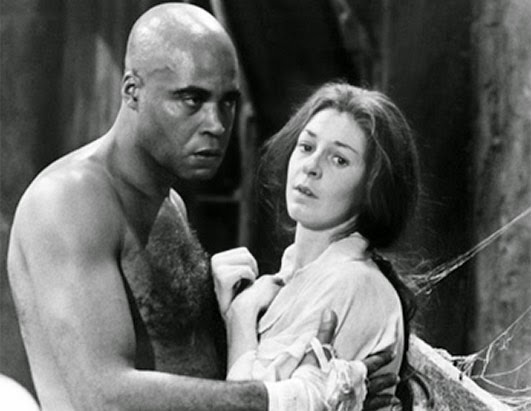
If, however, actors are merely part-time laborers that take a job when it happens to come around, then the rule book needs to change even more. If that definition is true (or more true, I guess) then we have a whole slew of others things that are going to have to get sorted out. Like the number of British productions coming to Broadway and touring nationally lock, stock and stage manager. Like the growing numbers of British and Australian actors coming to the States without the equivalent number of American actors working in their wake back home. Like the extreme lack of resources directed towards actually trying to help developing theatres grow beyond just demanding that they pay people at the expense of their very existence and the actors' desires.

I have been "in the theatre" most of my adult life and the vast majority of my friends and colleagues consider themselves artists.  They view their life as a creative journey that requires imagination, enthusiasm, passion, and education. They know going into it that it is going to be a tough road. They accept that. So long as they can find fulfillment in other ways -- like teaching theatre at a college, like booking a commercial or an occasional under five, like taking a role that they would never get to do otherwise at an intimate Los Angeles theatre -- everything will be okay. They can proudly and rightfully call themselves actors if they are engaged with their craft and sharing the results of their work.

Do actors want to get paid for their work? Of course, they do. Even though they know the odds are stacked against them. Just as painters want people to buy their canvases, actors want people to pay to see them perform. But painters don't paint only when they have a buyer lined up. They also don't sit around their apartments waiting for a commission. They paint. They create. Constantly. They expend time and energy and money as an investment into this obsession that is more than a job - it is a way of life. Imagine if a painter were only allowed to buy paint when he was guaranteed someone was going to buy a painting. The exact same thing holds true for the actor. In Los Angeles, that often means performing in a theatre with less than 99 seats in it. It means joining with other like-minded creatively obsessed theatre colleagues to collaborate -- to paint. 
Being an actor is a unique profession. It is unlike any other profession represented by labor unions. It is rarely, if ever, a 9 to 5 career. The coffee is worse. The uniforms change from job to job. It requires imaginative and experiential trial and error. Additionally, I think you could argue that actors are the only workers, union or otherwise, who are required to take a large part of their work home without pay regardless of contract, union status, or quality of show. Learning lines takes time. Actors do that outside of the rehearsal hall. Away from the stage. On their own time. For free. Always. That's what actors do.

The world that the actor lives in is a complicated one. It is also a unique one because, more often that we would like to admit, anyone who has an Equity card (or a SAG-AFTRA card for that matter) may call themselves a "professional" even if they have no training and little to no experience. Justin Bieber has done some TV. Mariah Carey and Britney Spears have been in movies. Jennifer Nettles is on Broadway. Does that make them actors? Does that make them artists? There's a difference between actors and celebrities.

To drill down further, each play and each each role requires specific criteria. Players are not cast for a role simply because they have a union card and are next in line. Each production or film or TV show or commercial has a litany of defining restrictions such as cast size, race, gender, age, etc. Each production, each role reduces the number of available actors by the specifics determined in the playwright's imagination. I mean, it's not like applying for jobs at a bank where a teller could be any gender, any age, and race. King Lear is old. Joan of Arc is a woman. Felix and Oscar are men. Acting is a hard, unfair and complicated business to be in. But as artists, few real actors working in Los Angeles would trade what they do for anything in the world despite all of these things.

In the 1970s, a theatre professor at Loyola Marymount University, the much loved and respected Emmett Jacobs, wrote the following in an LMU workshop program: "So often in the theatre, we are so trapped by the edifice complex and all the trappings that go with it, that we loose our capacity to do artistic research."

Artistic research.

Like painters and other artists, actors do not continue to grow because they have finished drama school or college. They do not rest on their laurels because they have finally gotten their Equity card. They do not, they cannot, create in a vacuum. Actors must get on their feet, get off book, collaborate with others, try things out, fail, adjust, try again. While money is important, it is not nor has it ever been the sole factor in why someone becomes an actor. Actors are artists.  They choose to be artists. Any changes in a small theatre plan should...must...accept that.

Monday, March 12, 2012

"John Carter" and 10 Tips to Movie Reviewers

My wife and I just saw "John Carter." Totally enjoyed ourselves. It was absolutely worth the $37.50 ($27 for two tickets and $10.50 for the medium drink and medium popcorn - I'm in training, hence the mediums). I'm thinking I'll buy the DVD when it comes out, too. Fun, exciting, great to look at. Lynn Collins is hot, Taylor Kitsch was a very good new face, Ciaran Hines headed up a marvelous supporting cast, and the creatures were totally cool looking. Oh, yeah, and the music was great, too. Just a very satisfying afternoon at the movies for a kid like me -- having refused to grow up. The theater was almost full, which was a good sign on a Sunday afternoon. All ages, too. Fun. Really fun!

On the way home we started talking about all the harsh reviews on this film. Hum. What are these guys smoking? Was it "Citizen Kane?" No, not supposed to be. Was it "Avatar?" No, didn't try to be. It was an adventure movie that was meant to take us to Mars for a couple hours on an journey with a hero who gets stranded in a foreign land, fights some really bad guys, makes some friends along the way and meets a pretty girl. It was a big Disney movie based on a classic science fantasy work by Edgar Rice Burroughs from one hundred years ago. Why all the negative reviews? What did they expect?


Anyone in show business has a love/hate relationship with reviewers. (Rant for Another Day Notice: I'm not referring to them as critics. Film critics are something else entirely and there aren't many of them anymore.) We love reviewers when they are nice to us and we hate them when they aren't. Hopefully, we are able to take them all with a grain of salt and keep doing the best job we can. Of course, if you are not in show business and read a bad review, you may inclined to avoid something if you read a bad review. Fight this urge! You'll miss out on many enjoyable surprises if you blindly follow any reviewer's opinion. Particularly, when reviews like many of those for "John Carter," where actually discussing the business of making "John Carter" and not the actual movie "John Carter.".


In the 24 hours since watching this movie, I've gone back and re-visited many of the reviews. The one thing I noticed is that, I almost always agree with Roger Ebert. He's fair and while he may ask questions like "why this and not that," he'll always stop and say something like, "But I must not review a movie that wasn't made." Good on you, Roger. I have come up with a few tips I think movie reviewers ought to try. I call them the Ten Tips for Better, More Relevant Reviews. Yeah, it's kind of a pretentious, but reviewers can be pretentious and none of them are going to read this blog anyway, so WTF. Here  they are.


Ten Tips for Better, More Relevant Reviews
  1. Watch a movie like a regular person. (I know, you don't think you ARE a regular person, but you are writing for regular people. So learn to talk to your audience. Not every one who reads your reviews is an industry insider.) Pay for some popcorn like the rest of us, leave your attitude at the door, sit down next to someone (not all by yourself on the end of an aisle) and let the movie wash over you. Laugh, cry, invest your emotions for a couple hours in the experience. Audiences have to do some work, too, you know. The same is true for watching a play, listening to a concert, or reading a book. You, as an audience member, are expected to play along for a little while.
  2. Review the movie that you are watching not the one YOU would have made had you chosen to be a lowly film maker instead of the heightened literary genius you are. Don't be a wimp, just admit that what you really want to do is be a screenwriter or maybe a director. Hell, everyone in Hollywood is a hyphenate. We'll understand.
  3. Don't review the trailer as part of your review. For me, trailers have always served more as awareness tools rather than 1-to-1 comparison utilities. Trailers are marketing tools made by trailer houses and designed to elicit a reaction like, "Hey, I love that actor!" or "Oh, man, that looks <insert appropriate adjective here>" or "okay, not my cup of tea." They are not meant to represent everything the movie may or may not be.
  4. Shut up about the budget of the movie. Yes, "John Carter" coast a ton of money to make. So what? What do I care when I sit down in the dark to watch? The amount of money a studio spends on a movie is a business decision. It's on the people who make the film NOT the people who watch it. It's a risk they know they are taking. A low budget film that makes a bazillion dollars is not necessarily a "better movie" than a more expensive one and vice versa.
  5. Don't complain that there aren't any "big stars" in the movie. Every actor starts as a nobody. They become famous later. Besides, once they DO become big stars, your expectations of them and their salaries are going to influence your reviews. So, do yourself and us a favor and just review the actor's performance not their StarMeter. 
  6. Stop comparing the movie to the book. Wanna know somethin' weird? We know that they are two different things. We actually are aware of the fact that some things we really like about the book may not make it into the movie. Yes, we have our opinions about these things, but let us judge for ourselves. Besides, if you read the book 30 years ago your opinion about whether or
  7. Stop comparing movies simply because they are in a similar genre. Not all science fiction movies can be compared to each other any more than all films with boats in them can be compared to "Titanic."
  8. If you think someone or something is particularly terrible -- tell us why. Don't just make a critical statement and expect us to infer your reasoning. For the most part, we are intelligent people who are interested in movies and in what you have to say. Otherwise we wouldn't be reading your review. We are not mind-readers, however. Besides, as I tried to explain to my first wife, "Just because," ain't a reason.
  9. Don't try to impress us with your journalism background or the depth of your film school language. We know how smart you are because you have a job writing for a living and we like to read what you write. (Well, except Entertainment Weekly writers. Jury's still out on some of them.) Face the fact that most movies are meant to entertain. As Lina Lamont would say, " ...to bring a little joy into our humdrum lives."
  10. Don't judge the movie before you see it. We know the difference between a "preview" and a "review."  In fact, don't even write a preview. Let one of your staff writers (I believe you would call them "minion") handle that job. 
If you need an example, here's a pretty good review from a blog at The Houston Press. It holds pretty close to most of the tips. Of course, the other option is for everyone to just stop reading reviews entirely. But then, what would guys like me have to complain about?

Monday, February 27, 2012

Why You Can't Read Plays

I was going to title this post: "Shakespeare Should Never be Taught as Literature." Then I thought some people wouldn't read it thinking it might only be about Shakespeare. Then I thought I'd be sneaky and call it "Never Read a Play Again!" in hopes that high school and college students would read it trying to get out of yet another assignment where they would have to analyze a boring drama by some dead guy who always wore a suit and tie.

Then a miracle occurred.

My wife found the following excerpt in a old theatre program. So instead of coming up with thoughts of my own this week, I'm just going to cheat and let you read what the legendary William Gillette had to say about reading plays. It's from his book, The Illusion of the First Time in Acting (New York, 1915, printed for the Dramatic Museum of Columbia University). You can get the ebook on Google Books for free. It's an excellent read for any student of acting, actual actor or theatre historian. So...read on:

"Incredible as it may seem there are people in existence who imagine that they can read a Play. It would not surprise me a great deal to hear that there are some present with us this very morning who are in this pitiable condition. Let me relieve it without delay. The feat is impossible. No one on earth can read a Play. You may read the Directions for a Play and from these Directions imagine as best you can what the Play would be like; but you could no more read the Play than you could read a Fire or an Automobile Accident or a Base-Ball Game. The Play -- if it is Drama -- does not even exist until it appears in the form of Simulated Life."

I have always railed against the teaching of Shakespeare (all plays, actually) in an English class. It is ultimately pointless. Plays are not meant to be read as literature, they are meant to be performed and seen by an audience at that moment. Each performance has the potential to be different from the night before. For the audience, and the actors, a play in performance is visceral. They are meant to be experienced then dissected. Didacticism must follow that intimacy of sitting in the dark.

Imagine trying to teach a class in cinema without watching some movies? A cooking class without food? Can't be done. Same with plays.

Monday, February 13, 2012

War Horse. See It.

Movies are manipulative. They are intended to be. That's why we go to them. We accept the fact that a good filmmaker, and even occasionally a bad one, will help us escape into our imaginations for a couple hours. We'll get to go to Pandora and have an adventure with sexy blue aliens, we'll fall in love with Sandra Bullock or Ewan MacGregor, we'll rob a casino with George Clooney, we'll even team up with Samuel L. Jackson and try to retrieve a suitcase stolen from our mob boss. We go to the movies to be swept away. Don't we?

My wife and I went to see War Horse this weekend. This film is based both on a 1982 children's book by Michael Morpurgo and a 2007 stage adaptation of the book (originally mounted at the Royal National theatre in London and now on tour in the U.S.). The movie was directed by Steven Spielberg, music by John Williams, produced by Dreamworks & Disney, blah, blah, blah. You probably know all this is you follow movies at all.

We left the theatre in a shambles. In fact, everyone in the theatre was a wreck. It is a beautiful, old-fashioned, sentimental story. A fabulous story that, yes, manipulates you -- at times to tears. If there is one thing Spielberg knows, it's timing. He has a masterful way of letting you breath in a movie between emotional high points. He knows when to soften a powerful scene with a bit of humor and how to make the character of a horse move you to tears and cheers and gasps.

But as we were walking out of our little neighborhood cineplex, we overheard another couple ask, "Why hasn't this movie done better? Everyone would love this picture." Why, indeed? When we got home, I flung open the iPad and Liz sat at the computer. We both started looking up reviews to find out what the problem was. Very quickly, we found the answer. Thanks to Rotten Tomatoes, Metacritic and a few other movie buff sites we frequent, we saw that this film was favorably reviewed by only 75% of people, we'll call them critics, who were writing about it. A full 25% did not like the film or found big flaws in it. How is that? How could this old-fashioned, sentimental beauty of a movie not score higher by everyone who loves movies?

Then it hit us. Like a ton of bricks. It's old-fashioned and sentimental. More John Ford than Christopher Nolan. The "user" reviews were occasionally shocking in their assessment of this movie. Boring, bland, awful, tedious, saccharine, poorly acted, trite, laughably bad. Wow. Granted, we don't know who most of these online "critics" are. No one uses their real name on the internet. But they certainly didn't see the same movie I saw.

Of course, art is subjective. I get it. Some things just may not be your cup of tea. But reading these 25% reviews, I found myself getting rather sad. My fear that we humans (at least a fourth of us, anyway) are denying ourselves the very things that make us human. The ability to empathize, to feel, to imagine. To view art, or life, openly and without filters. Letting it smack us right in the face and permitting our reaction to surprise us then taking it all in and allowing it to wash over us. Certainly, there are some of us who feel the need to cower in our shell and deny our feelings. Some who won't cut loose and risk the chance of their emotions rendering them silly or uncool. Some who don't rage or scream or recoil in fear or sob uncontrollably in the dark. Some of us are above that. Too cool, too considerate, too cynical of any thing that might smack of sentiment.

War Horse began life as a children's book. A successful one. So, I only can assume that kid's get it. But where does that innocence go? When do we pound out of our children the very thing that makes them, and us, human. Do we actively deny ourselves the ability to experience catharsis or are we programmed by others to stop it up. Sentimentality is not a bad thing. If you haven't already, go see War Horse. It's not a "war" movie. It's a story about a boy and his horse and how that horse touches others during a frightening time. I suggest you do with this movie what I advise all my acting students do with art in general: Don't judge too quickly. Let it wash over you in the dark. Allow it to manipulate you. That's why we go to the movies.

Thursday, February 9, 2012

Class is Only the Beginning

My acting students piss me off. I know, I know, they are probably going to read this. That's okay. They know I'm pissed off. No other artists have the utter lack of discipline as actors. Somehow, many young actors have bought into the old adage, "Learn your lines and don't bump into the furniture." Thank you, Spencer Tracy. Well, unless you ARE Spencer Tracy, you gotta do more than that. Learning your lines would be a pleasant start. But just a start.

Actually, if learning to act is just about adhering to someone's else quotes about it, then John Gielgud may have better advice for young actors, "Before you can do something you must first be something."

So many actors just starting out seem to believe that taking a class and auditioning is all it takes to call yourself an actor. (I say this having had the same misplaced attitude, lo these many years ago.) But it's what you do between classes and before auditions that make you a true actor. Does a musician just pick up an instrument a play a concert? No. There are hours upon hours of rehearsal, playing scales, practicing a particular piece of music. There's is the care and tuning of the instrument. Oh, yeah, and the rehearsal. I'm wondering if Yo-Yo Ma or B.B. King only played their instruments when a teacher was around? And when they were done playing, I wonder if they just tossed their instrument on the sofa until they needed it again. Doubtful.


Taking an class does not make you an actor any more than owning a fiddle makes you a concert violinist. But acting class is a place where you go to learn to play your instrument. Where you learn to tune it and care for it. It's a place where you pick up tips on how to get the right sound out of it; when to play fast or slow; when to play loud or soft. When to contort the strings violently to your will or when to gently stroke them. An acting class is a place where you learn how to play with other musicians in concert. How to form chords. When to let someone else take the lead and when to pull back and settle into the rhythm. It's also a place where you get to try out different styles of music in the form of scene work or monologues. Maybe for a very few, a little improvisation if it makes sense for your particular instrument or style of music.


AFTER class is over, go act. Find a play. Audition. Do something. Do another scene in class, hell, another class for all I care. Learn a new monologue on your own, memorize a whole play, whatever. There is no excuse not to pursue roles wherever you can find them. Sure, I know, you are holding out for the big pay day that a series or blockbuster film role will give you. But don't just wait around  for it to magically happen. Just like Yo-Yo and B.B., you gotta play the bars and piddly little stages. You have to work for a couple of beers or, maybe if you're lucky, a couple bucks to buy some Ramen. That's just the way it is. Those are the rules. No matter what city you are in those are the rules. Keep your trumpet polished. (Uhm, okay, maybe that one means the opposite of what I meant for it to mean.)


When actors comes to my class, there is an unspoken contract. They are agreeing that they are going to be...an actor. All in. That means they are going to do more than just show up to class. It means they are going to take everything they learned in class and put it into practice somewhere else. The class isn't the end, it's the means to an end. One of them, at least. It means they are going to learn their lines and maybe bump into the furniture until their shins bleed. Finally, it means they are going to stop listening to those that think because they are the class clown or funny at parties, that they would make a great actor. 


Let's face it, not everyone is cut out to be an actor. It takes work. Talent helps, but work separates the wheat from the chaff. (And no, I am not going to switch from music metaphors to agricultural ones. That would be too much even for me.)


Many years ago, Les Paul gave me an autographed guitar. Now, I'm not a guitar player, but I have a beautiful, un-played guitar signed by the man himself. I cherish it.  But, If I took that guitar and charged people to hear me play, it would cheat them and dishonor Lester. 

Before you go "do" acting -- "be" an actor. All in. Tune your instrument, maintain it religiously and play it whenever you get the chance. Oh, yeah, and learn your f**king lines.

Friday, October 28, 2011

Glorious Eccentricity

Right after acting school, I got a job as a waiter. Of course. But, after a couple of years of slinging tostada salads and  #2 combos (one taco, one cheese enchilada, rice and beans) I got tired of my clothes smelling like lard and my fingers like parsley. That and the fact that memorizing celebrity cocktail preferences was never my bucket of ice. (Dean Jagger did like his Ramos Fizz, though.) One day, after the perfect service of a very complicated special order, Dustin Hoffman stiffed me. Well, his wife stiffed me. Ratso Rizzo sat there and let her. That was the last burrito.

Lucky for me, I got a job at the Mayfair Music Hall in Santa Monica. The Mayfair was beautiful old girl. A delightfully garish old relic straight out of the Hollywood history books. Smelled like mold and old books. It sat boarded up for years after the Northridge quake and was finally razed a year or so ago. Very sad, indeed. My wife and I went by one day to try a swipe a brick out of the ruins but couldn't get over the fence.

The new owners at the time were trying to make a go of turning it into a legit house. Alvin Epstein directed Bud Cort in "Endgame," Phillip King performed his one-man "A Dicken's Christmas," the brilliant Jasper Carrott and the legendary Charles Piece both came in for special one-offs to pay homage to the music hall roots of the place. (If you don't know who either of these performers are, Google them. You're missing out.) And then..."Sherlock's Last Case." It was directed by the play's author, the irascible and eccentrically brilliant, or rather brilliantly eccentric, Charles Marowitz.

Charles is a critic, a director and a playwright. He is known for his outrageously, sub-text oriented, collage adaptations of Shakespeare, for his collaborations with Peter Brook, and for being one of the founders, along with Thelma Holt, of the Open Space Theatre. "Sherlock's Last Case" is easily his most successful and most well-known work. Beginning with it's world premiere at the Los Angeles Actor's Theatre in 1984 to it's re-staging in 1985 at the Mayfair and through to it's Broadway run with Frank Langella as the aquiline sleuth, the play has become a regional and community theatre stalwart. Not a brilliant play, but an entertaining couple of hours.The small cast and, basically, single set makes it possible for the most technically challenged regional groups. Doyle purists hate it, regular folk love it. Bonus points to Charles for the highly entertaining "A Background Note" in the acting script.

Regarding his approach to Shakespeare, he was once quoted as saying, "Imagine that Shakespeare's play [Hamlet in the case] is a precious old vase, and someone comes along and smashes that vase into a thousand pieces. If one were to take those pieces and put them back together, the arrangement would be new. That is, I suppose, what this (production) is. Shakespeare provides the vase and I provide the glue."  The problem with this construction method is that you take a perfectly good vase, smash it to bits and hope it holds water, or even flowers, when you are done putting it back together. Of course, with Marowitz, what he ends up with isn't Shakespeare. It's Marowitz. No matter what you think of the process or the product, he has created something new and done it with flair, panache, daring and confidence.

Love him or hate him, Marowitz is one of those guys that makes the Theatre entertaining. (emphasis intentional). For a couple of years, he wrote an immensely enjoyable blog entitled, An Actor Prepares. I haven't seen a new post for over a year now, but I hope he returns to it if he is able. He is witty, sarcastic, stern, intelligent and more  than a little opinionated. Anyone remotely interested in the stage should read a little Marowitz every once in awhile. He will help remind you why you were drawn to it in the first place. Of course, if you are like me, you may also think that he's absolutely full out it occasionally, but so what? Aren't we all?.  One of my favorite entries is one of the earliest: APHORISMS FOR THE YOUNG (AND NOT SO YOUNG) ACTOR. (I'll be stealing some of these for my Facebook updates.)


Now, Charles Marowitz wouldn't remember me from a ham sandwich (figurative and literally), but I have remembered him, followed his work and enjoyed his writings lo these many years later. The world needs more Charles Marowitz's. Those glorious eccentrics who actually have something to say and say it in their own unique way. If we don't get it, that's our problem.

Monday, September 26, 2011

Supporting Casts Make the Movie

...or TV show or play. I watched the season premier of the US version of Prime Suspect. Now before you say anything, no it is NOT the same as the original UK version with the fabulous (and still hot) Helen Mirren. Not supposed to be. Apples and oranges. Same title, sorta the same premise and the lead character has the same first name. Whatever. It's a good show. I like it. Maria Bello is strong in a part not typical for American TV. BUT (notice the capital letters for emphasis?), what I truly love about the show is the supporting cast. Great character actors you've seen a million times yet probably don't know their names. Brian O'Byrne, Kirk Acevedo, Peter Gerety -- all actors you have seen hundreds of times. These are the people Liz and I always say, "Oh, I love that guy! He was in that other thing. What's his name?"

     The idea that a great supporting cast can save an otherwise forgettable movie is not a new one. My in-laws used to say that when they were young they would go see any movie that had Thomas Mitchell or Barry Fitzgerald in it. For me it's Ward Bond. And Thomas Mitchell. And Ruth Hussey. Oh, and Edward Arnold, H.B. Warner, Mary Astor and a dozen other character actors that will always turn in an amazing performance no matter what. If fact, I'll go so far as to say that  John Wayne was so incredibly famous because, in every movie he ever made, he was surrounded by great supporting players. They made him appear better than he really was.

     Classic movies (you know, like you see on TCM) are great examples of putting together great actors around certain movie stars to make a movie work. Oh sure, Cary Grant and Rosalind Russell are perfect in His Girl Friday, but imagine what that movie would have been like WITHOUT Gene Lockhart, Abner Biberman or Clarence Kolb. The same holds true today. If a movie has a star I don't necessarily care for or don't know all that much about, I will take a risk on it based on the people around him. I am not a big Leonardo Dicaprio fan. I, generally, just never believe his performance. However, I went to see Inception when it was out. The supporting cast made that movie for me and, as a result, I actually enjoyed Leo.

     Not all character actors were or are movie stars, or even famous for that matter. The cast in Prime Suspect is a perfect example. And quite frankly, not all movie stars should be famous. They should be characters actors, second fiddles that make up a great cast. Ben Affleck (for my money) can't carry a movie on his own -- as the star. But, he is a very capable supporting actor. Dare I say, excellent. Shakespeare in Love and State of Play are examples of Ben's ability to create memorable performances -- just not leading ones.

     This idea is true on stage and on TV, too. Broadway has made a living lately by injecting "big name" stars into limited runs of things. Of course, the regular cast of Chicago does all the heavy lifting while songwriter and former American Idol judge Kara DioGuardi dances around as Roxie Hart. Somehow it's all forgiven when the the supporting players make her look like she belongs there.

     So, before you blow off seeing any movie or TV show or play, look up the names NOT on the poster. If it's a classic film and has Ward Bond or Thomas Mitchell in it, for sure watch it. It'll be great! Guaranteed.

Tuesday, January 4, 2011

The Falacy of Non-Traditional Casting -- I think....

This is a tough one. Not so much a rant this time as it is a continuing mind-bender that, for me at least, has no solution and never will. It also comes with this caveat: I am a white male. The vast majority of parts written are written for guys like me. This we know.

When young actors are in training, be it in college or at an acting school, there is never any thought as to limiting what characters you may someday play onstage. We are schooled early on that actors are actors and should WANT to play all different kinds of roles not just those defined by the color of our skin or our gender. In fact, many of us seek out those roles that may not fit perfectly into a typical "type-casting" scenario. We are led to believe that young leading men can play old character parts if the make up is good enough. (I mean come on, Olivier's Othello? Nailed it!) We are trained to think that the amazingly talented African American in our Acting III class is certainly capable of playing Falstaff. (A little padding here, some stipple there, viola!) How many great men of the stage have tackled Lady Bracknell? (Answer: A bunch!)

Then we are sent off into the real world. The world of types; the world of TV; the world of the Peter Principle. For years I was cast in every Neil Simon comedy on the West Coast. I was Leo, George, Felix, Sydney, Paul, you name it I played the straight, white guy. ("Straight" as in not the funny one.) But my acting school days we're still fresh in my bones. I longed for the chance to play Shylock the Jew (you'd think all my Neil Simon roles would have qualified me!), Othello the Moor (Olivier wore black-face), Tony Montana (Oh, wait, he was Cuban. Does that count as white since Pacino played him?)

The trouble we run into is that some works of theatre, film and TV really do require a certain race or gender to be cast in certain roles. They just do. Max in Bent kinda HAS to be a white male. He just does. The whole point of Troy Maxson in Fences requires that an African American male take us on that journey. And here's the part that is hard for me to parcel: Color blind casting only goes one way. Which really means it's not really color blind. Seems kinda like affirmative action for actors. Now, I am NOT suggesting we do away with affirmative action. I'm just saying that with actors, with the theatre, with all things of a creative nature, it seems like it should be different conversation. It just seems like we shouldn't even be talking about it. Of course, we can mount an Asian version of a Tennessee Williams play; Of course, James Earl Jones can play King Lear; Of course, Lawrence Olivier can play Othello; Of course, Macbeth can have an integrated cast.

Let's face it, casting Shakespeare plays with multi-racial casts is old news. Adrian Lester is the latest in, relatively, short list of actors of color to successfully deliver the bard (http:d.pn/fNmsCS). Even the histories are less about the actual people of history as they are the bigger issues and themes that have resulted in the passage of time. It's when we start to approach non-Shakespearean classics and contemporary works (okay, basically everything NOT Shakespeare) that we seem to get wrapped around the axle.

I think the answer lies not in trying to force race and gender issues for their own sake, but to create more diverse properties in the first place. (Tyler Perry productions are not my cup of tea, but you have to admire the fact that he is writing and producing specific new material for black actors and a particular audience. Barring a floodgate of "diversity projects" all of a sudden getting green lighted in Hollywood or produced in regional theatres nothing will change, I fear.) If we can't do that then we just perpetuate the problem. In an opening night speech by Des McAnuff, the artistic director hit the nail on the head. And while he was talking about Canada, it remains true for us in the lower 48, "Ours is a multi-racial society ... If our audiences can’t find their own reflections on our stages, as Shakespeare’s audiences did on his, we cannot possibly claim to be speaking to Canadians [or society] today.

What if we didn't worry about "non-traditional" casting and just worried about "casting?" You know, acting school style.What if we were to cast our shows with the best actors that came to the audition? I know, I know, the wheels would fall off of Hollywood and dozens of agents would be unemployed and casting directors would actually have to learn something more about acting than shirt size and hair color. But what if?

Bottom line is this: Someday I would really like to peek into an audition and have no idea what was being cast. I'd like to see all kinds of shapes, sizes and colors. I would like what I learned in my acting classes to be true. I think, anyway... (Oh, and I'd really like to see Helen Mirren play Prospero. Wait, they did that already?)

Addendum: Here's another take that's pretty good, too. A short article by Phillip W. Chung.

Tuesday, August 31, 2010

Emmys. Yes, I do love my awards shows.


Well, the big ones anyway. I watch four awards shows religiously. (Can I say that in reference to watching awards shows? That I watch them "religiously?" Good thing no one reads these little rants as I'm sure that would offend someone.) Yes, now where was I? Four and four only: Oscars, Tonys, Grammys and the Emmys. (The Grammys are on the bubble for me next year. Too rude, too weird, too...just too fucking bizarre. "I know, let's cram every possible style of music into a a three hour show, throw in a bunch of  lasers during some country songs, a ton of smoke and special effects during, well, everything and make sure people accepting the awards are either drunk, ludicrously arrogant or completely incomprehensible. Wow! What a night!")

In every case, I've often thought that TV needs some theatre producers to figure out how to really put on a show that makes sense. Then of course, in the case of the Tony's, SOMEBODY needs to figure out how to present a representation of the "plays" that are nominated. Don't get me wrong, I love musicals, but straight plays need to be showcased too and the Tony productions have never been able to get that piece right. And can someone please hire a sound crew? For the last several years there has been miscues, microphone problems, bad mixing...I mean, if that were to happen during an actual Broadway play as often someone would get fired. People, PLEASE!

Generally, I enjoy the big four. Oh, sure, I complain after they are over. They are always uneven, someone goes on too long, someone doesn't go on long enough, something I think is shitty wins over things I think are awesome. Hey, it's an awards show, I'm okay with that and it's part of the fun.

But there's one thing that get me ranting every single time. Every time. When, let's say, a show wins for best drama series -- Does every single person even remotely affiliated with the show have to come up on stage? Really? REALLY? These televised awards shows, like the comedies and dramas and TV movies they honor, are television productions themselves. And pretty expensive ones. They have a sets and costumes and commercial breaks.  They have performers and lights and cameras. They have a time limit and and they have a budget they have a director. It is a big production. If a similar thing happened during the filming of "Mad Men" there would be all hell to pay! If John Hamm let his manager and agent and lawyer and make-up artist appear in every seen with him, they'd never get the show finished.

Oh and here's another thing: You guys all know how cameras work right? The camera is on the guy at the mic! Most of you aren't even making it onto our TV screens. It's ridiculous, it's selfish and it takes up too much time. Time that maybe we could give who have something to say. Time for another Jimmy Fallon bit. Time for a another clip or something. But, no, we have to sit at home, behind our TV trays, and watch 57 people we wold never recognize on the subway (or in a Subway) stumble, kiss, shake hands, and play grab ass on the way to a MCU of the producer giving a shitty thank you speech. Can it already. Let the producer get up there, accept the award, give his shitty speech alone and revel in the fact that you were part of something really special. My mother would have said, "Have some class."

It's not that I begrudge people the opportunity to take a bow for their work. That's what all the red carpet BS and the press conferences are for. The fans at home love to see their favorite shows and favorite actors win stuff. They just love to see their favorites get nominated. So don't waste their time -- give them the celebs, put a lid on the brass. Hey, producers, we ain't watching to hear you blather on. We wanna see George Clooney. Claire Danes. Like the TV shows and movies and theatre (okay, and music) you are supposed to be celebrating, end on a high note. Leave us wanting more. Don't leave us with the image of a bunch of people we don't know and then a quick cut to the host saying, "Goodnight, everybody."

This is, after all, Hollywood.

Tuesday, March 9, 2010

Award Shows: They're Kinda Like Crack -- Only With Commercials

I watch all the awards shows. Well, not ALL the awards shows. The big ones that have to do with movies and theatre. Oscars, Emmys, Tonys, SAG Awards (my new favorite), Golden Globes. I'll also tune into the Grammys for a few minutes here and there. Awards shows are the ultimate guilty pleasure. Oh, sure, I could be watching a great re-run of Law & Order: SVU or trying to catch up on Burn Notice or making sure that the episode of Bones isn't the One that my wife keeps telling me about but I can NEVER find..., but awards shows are just too much for me to miss. The drama, the beauty, the ego, the BS, the ridiculous clothing, the bad hair, the unshaven masses, the terrible local coverage. I love it.

Things never work out the way I think they should. Of course, the movie I thought was heads and tails above the rest is always slighted somehow. The one film I didn't see always wins something huge. The actor I thought just sucked out loud is guaranteed a trophy of some kind. Someone will always say something rude and stupid. And, thankfully, something nice and good and kind and maybe even inspiring will eventually occur. At least once. Maybe twice.

I'm still amazed, though, at how an industry who's sole purpose is to entertain us can't put together a better 3 hours of entertainment. With few exceptions, the opening numbers are labored. Getting presenters on and off stage takes forever. They have to walk FAR! The writing is a little heavy handed at times. Oh, and why does everyone have to be announced in? Don't we know who these people are? They are famous after all. If we know Kate Gosslin and Chloe Kardasian, sure we know who Matt Damon and Charlise Theron? Don't we?

Someone or something is always forgotten or flubbed. Leaving Bea Arthur and Farah Fawcett out of the "In Memorial" piece really was inexcusable. I sit through the end credits of every film I go see and I'll bet they don't forget anybody. How does that happen? You remember to put in Michael Jackson AS AN ACTOR but NOT Bea Arthur or Farah Fawcett? Hum. Don't get it.

Then there are the speeches. I have a love/hate relationship with the speeches. I so want them to be inspired oratories on art and dreams. Usually, they are frantic attempts to be sure to thank an agent or publicist. Vapid lists of names no one watching has ever heard of. So you just won an Oscar. What's your agent gonna do, drop you if you don't thank him? Thank your agent at the party. Thanks your manager at the hotel bar or in the limo on the way home. This is YOUR award. YOU did the work. Inspire us with your dreams, fill us with the journey of creating the role, regale us with exotic locations. Don't thank the valet for parking your car close to entrance.

Oh, and for the sake of film and theatre people not as fortunate as you, show some class. Don't cop major attitude when accepting the award as if it actually means something to the rotation of the Earth. More than likely, you weren't the only one considered for the role. More than likely, you don't have the body of work that other more talented nominees in the category have. More than likely, you don't have the training or the experience that your colleagues have. More than likely, your performance struck a cord in the culture and wasn't all that terrific anyway but the the film you were in made an impact that couldn't be ignored. So really, your award is less about YOU and more about the ROLE you played. I'm just saying....

Every year on every show there's gonna be one. At least. One moment that makes you squirm in your La-Z-Boy. One out of place political statement (Oscars/Remember the Brando and Sasheen Littlefeather affair?), one amazing display of ego (VMAs/Can you say "Kanye?"), or one moment of total grandstanding (Oscars/Michael Moore). Hey, it happens. We can't control ourselves.

We show biz folk do have large egos, but most of us also realize that we don't do what we do all by ourselves. Sandra Bullock certainly didn't NEED to be self-effacing and funny. She could have been bitchy and arrogant. She could have told us how awesome she was in the The Blind Side and how all the other nominees were there by the sheer fact that their schedules allowed them to go on talk shows. But she didn't.

See, this why I love awards shows. Other than waiting for Brett Favre to retire and un-retire again, when does a fella really get a chance to this worked up? Now, what's playing at The Bridge tonight?

Monday, March 1, 2010

Robert Prosky


You might not know the name, but you certainly know the actor. Robert Prosky is one of those actors whose career I have always respected... and coveted. First of all, he was a gifted actor. Second, most people would not recognize him if they bumped into him in the produce aisle. Some might do a double take thinking he was a distant uncle or former school teacher. If you were to ask me to "type" him, I guess I would say he is like a softer version of Ed Asner. He generates the same power with less bombast. 


Prosky died in 2008 at the age of 77. He was an actor that did everything: Stage, films, television. "Either for tragedy, comedy, history, pastoral, pastoral-comical, historical-pastoral, tragical-historical, tragical-comical-historical-pastoral, scene individable, or poem unlimited: Seneca cannot be too heavy, nor Plautus too light." I had the pleasure of seeing him in A Walk in the Woods. Sometime ago Actors' Equity sent the following Robert Prosky missive in the mail to all its members. (I came across it while catching up on some filing I promised my wife I would get around to back in 2009.) I have shared it just as Equity had sent. I'll bet the capital "A' in Actor was Prosky's.


"I love Actors and by extension, the theater. I love the minutia that surrounds them both. I love listening and telling Green Room war stories. I love the onstage triumphs and yes, I love even the disasters. I love the adrenaline that shoots thru every Actor onstage when something goes wrong, and the relief that sweeps thru when some heroic Actor saves the day. I love performance. That time when the human beings on stage interact with the human beings in the audience and together they create the event of performance. It's one of life's most civilized experiences.


It has been said that an Actor must have the hide of a rhinoceros, the courage and audacity of a lion, and most importantly, the fragile vulnerability of an egg. It also has been said, and I'm not sure by whom, that the moment of not knowing is the moment that has the greatest potential for creativity. The professional and private lives of most Actors are filled to the brim with moments of not knowing. Actors are survivors and will continue to strive because they have the need to celebrate, in performance, that sacred communion between Actor and audience."


Amen.